
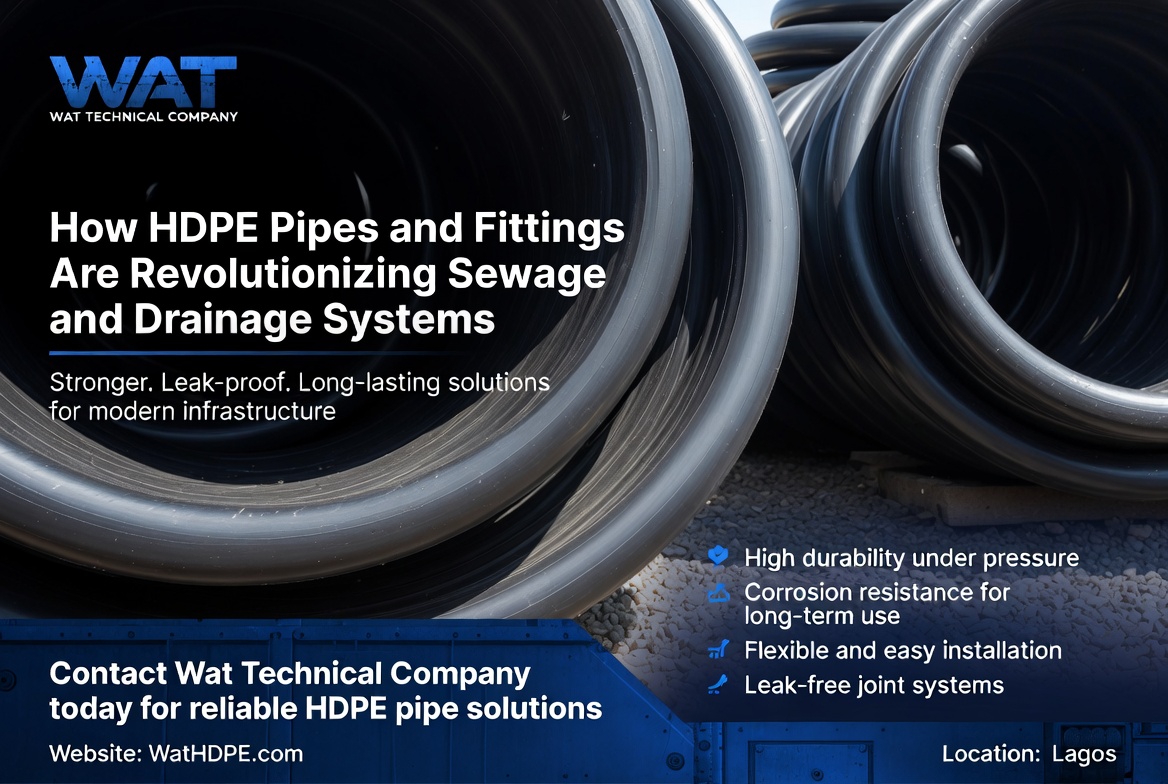
How HDPE Pipes and Fittings Are Revolutionizing Sewage and Drainage Systems
Efficient sewage and drainage systems are essential for managing wastewater, stormwater, and runoff in both urban and rural environments. As cities expand and climate conditions change, modern infrastructure demands piping solutions that deliver durability, sustainability, and long-term cost efficiency. Compared to traditional materials such as PVC, concrete, clay, and metal, HDPE pipes and fittings provide superior performance and reliability. This article explores how HDPE technology is transforming sewage and drainage systems and why WAT Technical Company Limited is a trusted solution provider.
1. Exceptional Corrosion and Chemical Resistance
HDPE pipes and fittings offer outstanding resistance to corrosion and chemical attack. Unlike metal or concrete pipes, HDPE does not rust, degrade, or deteriorate when exposed to aggressive wastewater, industrial effluents, stormwater, or runoff.
WAT HDPE products are specifically designed to handle chemically aggressive environments, ensuring long-term structural integrity, reduced maintenance, and lower lifecycle costs compared to traditional piping materials.
2. Superior Leak-Free Joints
HDPE pipes are installed using advanced fusion techniques that create seamless, monolithic joints. These joints eliminate leakage risks caused by infiltration or exfiltration common issues in conventional drainage systems. Leak-free joints are critical in sewage and drainage networks, as leaks can lead to soil erosion, groundwater contamination and flooding. HDPE systems significantly enhance system reliability and environmental protection.
3. Environmental Sustainability
HDPE pipes and fittings are environmentally friendly throughout their lifecycle.
They do not leach harmful substances during manufacturing, installation, or operation, making them safe for both human health and the environment.
Additionally, HDPE pipes have a lower carbon footprint than many traditional materials and are 100% recyclable, supporting circular economy principles and sustainable infrastructure development.
4. Lightweight and Cost-Effective Installation
HDPE pipes are lightweight compared to concrete and metal pipes, making transportation, handling, and installation easier and faster. Reduced equipment needs and manpower result in lower labour costs and shorter project timelines. These advantages make HDPE sewage and drainage systems highly cost-effective, especially for large-scale municipal and industrial projects.
5. Versatility
HDPE pipes and fittings are highly versatile and suitable for a wide range of applications, including:
Municipal sewage networks
Industrial wastewater discharge
Stormwater drainage systems
Surface and underground runoff management
Their flexibility and strength allow them to perform efficiently in both underground and above-ground installations, even in challenging soil and environmental conditions.
Conclusion
Rapid urbanization, population growth, and climate variability demand modern, resilient sewage and drainage infrastructure. Choosing high-quality, durable, and cost-efficient piping solutions is essential to prevent flooding, system failures, and contamination of natural water bodies. HDPE pipes and fittings offer unmatched durability, chemical resistance, leak-free performance, and environmental sustainability making them a leading solution for modern sewage and drainage systems.
Visit www.wathdpe.com to learn more about WAT HDPE technology and how our solutions are transforming sewage and drainage infrastructure.
Efficient sewage and drainage systems are essential for managing wastewater, stormwater, and runoff in both urban and rural environments. As cities expand and climate conditions change, modern infrastructure demands piping solutions that deliver durability, sustainability, and long-term cost efficiency. Compared to traditional materials such as PVC, concrete, clay, and metal, HDPE pipes and fittings provide superior performance and reliability. This article explores how HDPE technology is transforming sewage and drainage systems and why WAT Technical Company Limited is a trusted solution provider.
1. Exceptional Corrosion and Chemical Resistance
HDPE pipes and fittings offer outstanding resistance to corrosion and chemical attack. Unlike metal or concrete pipes, HDPE does not rust, degrade, or deteriorate when exposed to aggressive wastewater, industrial effluents, stormwater, or runoff.
WAT HDPE products are specifically designed to handle chemically aggressive environments, ensuring long-term structural integrity, reduced maintenance, and lower lifecycle costs compared to traditional piping materials.
2. Superior Leak-Free Joints
HDPE pipes are installed using advanced fusion techniques that create seamless, monolithic joints. These joints eliminate leakage risks caused by infiltration or exfiltration common issues in conventional drainage systems. Leak-free joints are critical in sewage and drainage networks, as leaks can lead to soil erosion, groundwater contamination and flooding. HDPE systems significantly enhance system reliability and environmental protection.
3. Environmental Sustainability
HDPE pipes and fittings are environmentally friendly throughout their lifecycle.
They do not leach harmful substances during manufacturing, installation, or operation, making them safe for both human health and the environment.
Additionally, HDPE pipes have a lower carbon footprint than many traditional materials and are 100% recyclable, supporting circular economy principles and sustainable infrastructure development.
4. Lightweight and Cost-Effective Installation
HDPE pipes are lightweight compared to concrete and metal pipes, making transportation, handling, and installation easier and faster. Reduced equipment needs and manpower result in lower labour costs and shorter project timelines. These advantages make HDPE sewage and drainage systems highly cost-effective, especially for large-scale municipal and industrial projects.
5. Versatility
HDPE pipes and fittings are highly versatile and suitable for a wide range of applications, including:
Municipal sewage networks
Industrial wastewater discharge
Stormwater drainage systems
Surface and underground runoff management
Their flexibility and strength allow them to perform efficiently in both underground and above-ground installations, even in challenging soil and environmental conditions.
Conclusion
Rapid urbanization, population growth, and climate variability demand modern, resilient sewage and drainage infrastructure. Choosing high-quality, durable, and cost-efficient piping solutions is essential to prevent flooding, system failures, and contamination of natural water bodies. HDPE pipes and fittings offer unmatched durability, chemical resistance, leak-free performance, and environmental sustainability making them a leading solution for modern sewage and drainage systems.
Visit www.wathdpe.com to learn more about WAT HDPE technology and how our solutions are transforming sewage and drainage infrastructure.
0 comments