
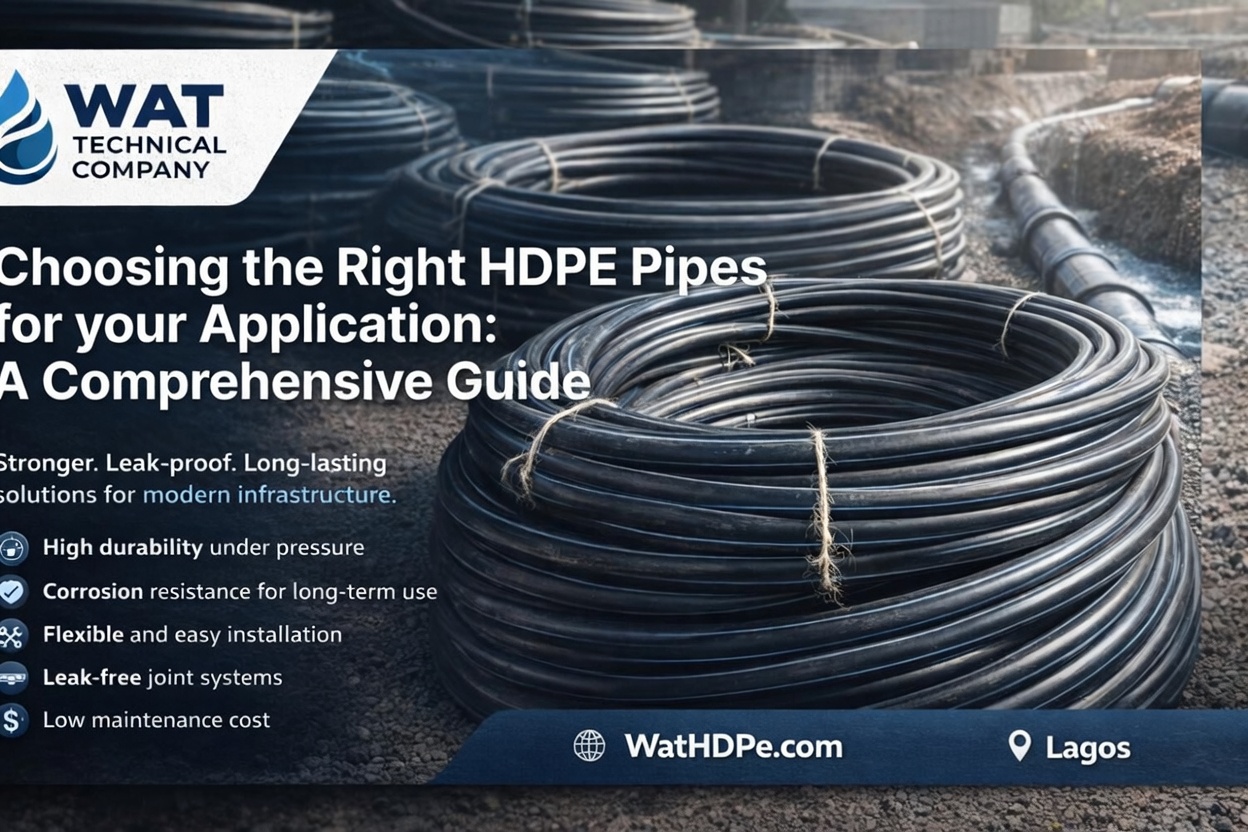
Choosing the Right HDPE Pipes for Your Application: A Comprehensive Guide
High-Density Polyethylene (HDPE) pipes are widely used in water supply systems, gas pipelines, agricultural irrigation, sewage and drainage, petrochemical processing, marine works, mining, and construction projects. Their flexibility, durability, corrosion resistance, and long service life make them one of the most reliable piping solutions in modern infrastructure.
Why Choosing the Right HDPE Pipe Matters
Selecting the right HDPE pipe is critical to the performance, safety, and cost-effectiveness of your piping system. HDPE pipes differ in diameter, pressure rating, wall thickness, and material grade. Choosing the correct pipe ensures efficient flow, minimizes maintenance costs, and extends system lifespan. This guide outlines the key factors to consider when selecting HDPE pipes for any application.
1. Understand Your Application Requirements
Before selecting an HDPE pipe, clearly define your system requirements, including:
Purpose of the pipeline
Operating pressure
Flow rate and velocity
Temperature range
Installation environment (above ground or underground)
Understanding these parameters ensures the pipe is fit for purpose and performs
reliably.
2. Select the Right Pipe Specifications
HDPE pipes are manufactured in various diameters, pressure ratings, and wall thicknesses. Hydraulic design calculations should be used to determine the appropriate pipe size based on flow rate and pressure requirements. The correct diameter prevents excessive pressure loss and avoids high flow velocities that can lead to pipe wear.
3. Determine the Required Pressure Rating
Pressure rating is determined by the wall thickness of the HDPE pipe. Pipes with thicker walls can withstand higher internal pressures. HDPE pipes are available in different pressure classes, making it essential to select one that safely handles your system’s operating pressure.
4. Evaluate Durability and Longevity
HDPE pipes offer a service life of 50 to 100 years under normal operating conditions. They provide excellent resistance to corrosion, abrasion, chemical attack and environmental degradation. WAT HDPE pipes are designed to maintain structural integrity even in demanding applications.
5. Choose the Correct HDPE Pipe Grade
Selecting the right PE material grade is essential for long-term system performance.
Under-sized pipes increase friction losses and reduce efficiency.
Over-sized pipes increase costs and can cause unstable flow conditions.
The right pipe size and grade ensure consistent flow, reduced stress on joints, and minimal wear on fittings.
6. Ensure Compliance with Standards
HDPE pipes should comply with recognized standards such as ISO 4427 and ISO 4437 which cover different applications, and each application requires specific pipe specifications. For example, HDPE pipes used for high-pressure water systems differ from pipes used for gas pipelines. All WAT HDPE pipes comply with applicable local and international standards.
7. Apply Proper Installation Methods
Correct installation is critical to system performance. HDPE pipes should be joined using approved methods such as butt fusion, electro fusion, or compression fittings.
WAT Technical Company provides expert installation services, ensuring leak-free joints and long-term reliability.
8. Consider Environmental Conditions
Environmental factors play a major role in pipe selection, including:
Soil type and ground conditions
UV exposure for above-ground installations
Temperature extremes
For above-ground or high-temperature applications, higher pressure-rated pipes are recommended for enhanced durability.
9. Consult HDPE Pipe Experts
Working with experienced professionals ensures optimal pipe selection and system design. WAT Pipes and Fittings provide high-quality HDPE pipes, expert technical support, environmental sustainability, and reliable after-sales service.
Conclusion
Choosing the right HDPE pipe is essential for building an efficient, durable, and reliable piping system. By considering application requirements, pipe specifications, pressure ratings, standards, installation methods, and environmental conditions, you can ensure long-term system success.
Whether for residential, municipal, or large-scale industrial projects, WAT HDPE Pipes deliver professional-grade solutions you can trust.
Visit www.wathdpe.com to learn more about our environmentally sustainable HDPE piping solutions.
High-Density Polyethylene (HDPE) pipes are widely used in water supply systems, gas pipelines, agricultural irrigation, sewage and drainage, petrochemical processing, marine works, mining, and construction projects. Their flexibility, durability, corrosion resistance, and long service life make them one of the most reliable piping solutions in modern infrastructure.
Why Choosing the Right HDPE Pipe Matters
Selecting the right HDPE pipe is critical to the performance, safety, and cost-effectiveness of your piping system. HDPE pipes differ in diameter, pressure rating, wall thickness, and material grade. Choosing the correct pipe ensures efficient flow, minimizes maintenance costs, and extends system lifespan. This guide outlines the key factors to consider when selecting HDPE pipes for any application.
1. Understand Your Application Requirements
Before selecting an HDPE pipe, clearly define your system requirements, including:
Purpose of the pipeline
Operating pressure
Flow rate and velocity
Temperature range
Installation environment (above ground or underground)
Understanding these parameters ensures the pipe is fit for purpose and performs
reliably.
2. Select the Right Pipe Specifications
HDPE pipes are manufactured in various diameters, pressure ratings, and wall thicknesses. Hydraulic design calculations should be used to determine the appropriate pipe size based on flow rate and pressure requirements. The correct diameter prevents excessive pressure loss and avoids high flow velocities that can lead to pipe wear.
3. Determine the Required Pressure Rating
Pressure rating is determined by the wall thickness of the HDPE pipe. Pipes with thicker walls can withstand higher internal pressures. HDPE pipes are available in different pressure classes, making it essential to select one that safely handles your system’s operating pressure.
4. Evaluate Durability and Longevity
HDPE pipes offer a service life of 50 to 100 years under normal operating conditions. They provide excellent resistance to corrosion, abrasion, chemical attack and environmental degradation. WAT HDPE pipes are designed to maintain structural integrity even in demanding applications.
5. Choose the Correct HDPE Pipe Grade
Selecting the right PE material grade is essential for long-term system performance.
Under-sized pipes increase friction losses and reduce efficiency.
Over-sized pipes increase costs and can cause unstable flow conditions.
The right pipe size and grade ensure consistent flow, reduced stress on joints, and minimal wear on fittings.
6. Ensure Compliance with Standards
HDPE pipes should comply with recognized standards such as ISO 4427 and ISO 4437 which cover different applications, and each application requires specific pipe specifications. For example, HDPE pipes used for high-pressure water systems differ from pipes used for gas pipelines. All WAT HDPE pipes comply with applicable local and international standards.
7. Apply Proper Installation Methods
Correct installation is critical to system performance. HDPE pipes should be joined using approved methods such as butt fusion, electro fusion, or compression fittings.
WAT Technical Company provides expert installation services, ensuring leak-free joints and long-term reliability.
8. Consider Environmental Conditions
Environmental factors play a major role in pipe selection, including:
Soil type and ground conditions
UV exposure for above-ground installations
Temperature extremes
For above-ground or high-temperature applications, higher pressure-rated pipes are recommended for enhanced durability.
9. Consult HDPE Pipe Experts
Working with experienced professionals ensures optimal pipe selection and system design. WAT Pipes and Fittings provide high-quality HDPE pipes, expert technical support, environmental sustainability, and reliable after-sales service.
Conclusion
Choosing the right HDPE pipe is essential for building an efficient, durable, and reliable piping system. By considering application requirements, pipe specifications, pressure ratings, standards, installation methods, and environmental conditions, you can ensure long-term system success.
Whether for residential, municipal, or large-scale industrial projects, WAT HDPE Pipes deliver professional-grade solutions you can trust.
Visit www.wathdpe.com to learn more about our environmentally sustainable HDPE piping solutions.
0 comments